
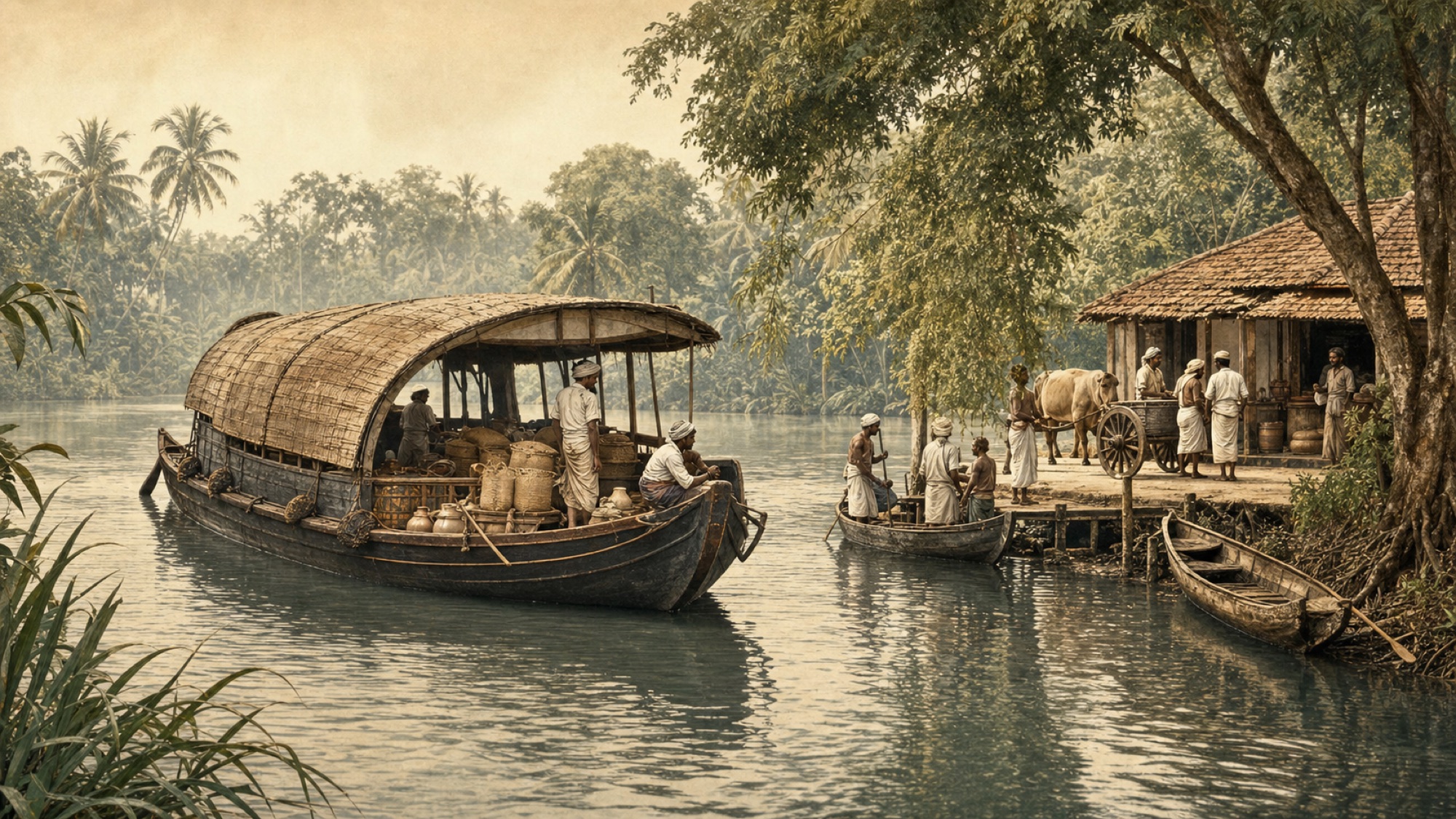
Long before this place welcomed resort guests, it welcomed boats, traders, travellers and village families. The Paaruwa Totupola was a working ferry yard—and the centre of a water-connected community.
The ferry yard
More than 150 years ago, Mendis Perera Mudalai nurtured a thriving waterways ecosystem along the Bolgoda. Large covered “Paaruwa” house boats carried rice, spices, gems and other goods from the Ratnapura heartland towards Panadura’s coastal markets, when waterways were among Sri Lanka’s essential trade routes.
After cargo reached the Totupola, cattle carts and manual carriers helped move it onward to nearby villages and markets. A riverside tea boutique refreshed travellers and boatmen, while the communal bathing place was where villagers washed, talked and shared news.
Many ways across the water
Paaruwa
Large covered house boats used for long-distance transport and trade.
Palam Paaruwa
The local open ferry that linked Kindelpitiya towards Hirana and Panadura, operating until 2010.
Oruwa & Angula
Single-hull canoes and stable twin-hull craft used for fishing, travel and heavier loads.
A living legacy
Mendis Perera Mudalai created more than a ferry yard. He helped connect inland and coastal trade, enabled village livelihoods and preserved the social and spiritual rhythms of the water. The Veediyagoda water-cutting ceremony continues to bless these same waters today.
“The calm waters, soft breeze and gentle natural rhythm you feel at Paaruwa today are the same elements that shaped this land more than a century ago.”
Paaruwa Nature Resort honours that inheritance through place-based hospitality: inviting visitors not simply to look at the landscape, but to slow down inside its story.
Come into the story.
Visit the heritage picture wall, spend time by the lake and ask our team about incorporating local heritage into your Paaruwa experience.
Plan a visit